Key Takeaways
- An aircon freezing up usually has 1 of 5 causes, and an Urban Company less-cooling diagnosis costs $60 in Singapore and takes about 60 minutes. The $60 visit fee is replaced with the valid service cost if you go ahead with the repair.
- Switch the cooling off the moment you see ice. Thaw it on fan mode and put a towel under the unit for the meltwater. Never chip the ice off.
- A clogged filter or a dirty coil is the most common cause, and both cut the warm air the coil needs to stay above freezing.
- Ice that comes back after the filter is clean points to low gas, which means a leak that a trained technician has to find first.
- Set it at 25°C on a normal fan speed. That’s NEA’s advice, and it keeps the coil from running too cold overnight.
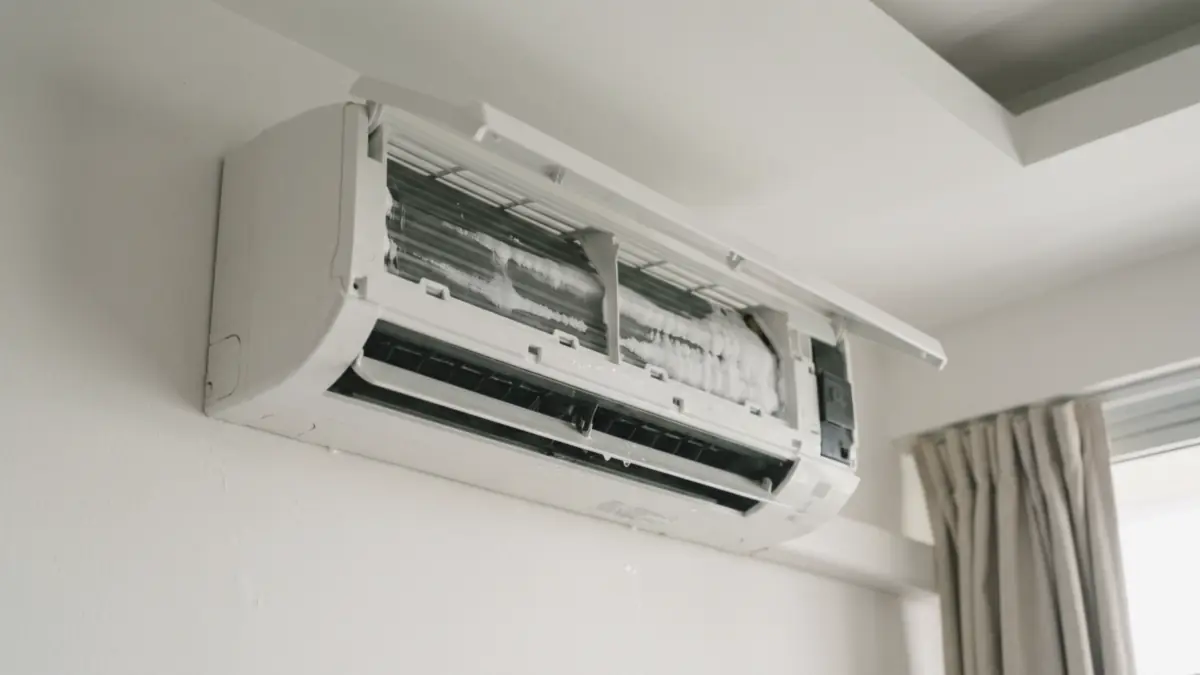
It’s 7am in your 4-room flat in Punggol. The bedroom aircon ran at its lowest setting all night, and now the air is weak and barely cool. You lift the front panel and there’s white frost on the fins behind the filter.
Why Is My Aircon Freezing?
Because the indoor coil is getting colder than 0°C. Warm room air passing over the coil normally keeps it just above freezing. When that breaks down, the moisture on it turns to frost, then ice. The 5 usual causes:
- A clogged filter. The mesh dust screen behind the front panel blocks airflow when it’s coated in dust.
- A dirty coil or blower wheel. Grime on the fins, or on the drum-shaped fan behind the louvres, does the same from inside the unit.
- Low refrigerant (gas). Lower pressure means a colder coil. Gas doesn’t get used up, so low gas means a leak somewhere.
- Settings that are too cold. The lowest temperature on a low fan speed, for a whole night in a small room, can push the coil below freezing.
- A fan fault. If the indoor fan is slow or stopped, the coil ices quickly.
What Does Each Sign of a Frozen Aircon Mean?
Where the ice is, and what else is happening, narrow it down.
| Sign | Likely cause | DIY or technician |
|---|---|---|
| Frost on the coil, filter visibly grey | Clogged filter | DIY: thaw, rinse the filter |
| Frost returns with a clean filter, air feels weak | Dirty coil or blower wheel | Technician: servicing |
| Ice on the copper pipes, hissing, cooling getting weaker over weeks | Low gas from a leak | Technician |
| Frost after a night on the lowest setting, fine in the day | Settings too cold | DIY: 25°C, normal fan speed |
| Little or no air from the vents while the unit hums | Indoor fan fault | Technician |
What Should You Do When Your Aircon Is Frozen?
Stop the cooling, let it thaw, then find the cause.
- Turn off cooling. Fan mode thaws the coil faster; otherwise switch the unit off.
- Catch the meltwater. Lay a towel below the unit. A thawing coil can drip more than the drain tray holds.
- Leave the ice alone. No scraping and no hair dryer. The fins bend easily and the unit is wired to the mains.
- Check the filter once it has thawed. If it’s grey with dust, rinse it, let it dry fully and slot it back in.
- Restart at 25°C on a normal fan speed and check after an hour or two.
If water keeps dripping after the ice is gone, read why an aircon drips water.
Is It Safe to Keep Running a Frozen Aircon?
No. Ice insulates the coil, so the room barely cools. The meltwater can overflow onto your wall or floor. And the compressor in the outdoor unit keeps straining, which is how a cheap fix becomes an expensive one.
If the isolator switch or power point feels hot, crackles, or the breaker trips, switch off at the isolator and leave the casing closed. EMA requires electrical work in the home to be done by a Licensed Electrical Worker.
Why Is My Aircon Pipe Frozen?
Frost on the copper pipes is a stronger sign of low gas than frost on the coil alone, especially with a soft hiss and cooling that has got weaker over weeks.
A top-up on its own only buys time if the leak is still there. Our aircon gas top-up guide explains why the leak comes first. Refrigerant work is a trained technician’s job. NEA notes that household aircon technicians are trained under an ITE certificate course in residential aircon refrigerant handling, and under SCDF’s rules for R32 systems, manufacturers must make sure service personnel have completed it.
In an HDB flat the outdoor unit sits on a ledge or bracket outside the window, so don’t climb out to look. BCA advises owners to have a trained installer check the outdoor unit’s supports during servicing.
How Do You Stop Your Aircon Freezing Up Again?
Keep the air moving over the coil, and don’t run it colder than it needs to be. NEA’s household advice is to set the aircon at 25°C, check the filter once a month and have the unit inspected annually.
- Use a normal or auto fan speed overnight, not the lowest.
- Check the filter monthly, more often if your windows face a busy road.
- Get the coil cleaned regularly. Book regular servicing, such as FoamJet. A heavily caked blower wheel may need a Chemical Overhaul, which takes the unit apart; see what a chemical wash covers.
If several rooms share 1 outdoor unit, see types of aircon in Singapore homes.
When Should You Call an Aircon Technician?
Call one if the ice comes back within a day or two after you’ve cleaned the filter, or straight away if you see frost on the pipes, hear a hiss or the indoor fan isn’t spinning. Also call if the unit has thawed but still isn’t cooling. Why an aircon stops cooling covers the other causes.
With Urban Company, a less-cooling diagnosis is $60 and takes about 60 minutes. The $60 visit fee is replaced with the valid service cost if you go ahead with the repair. Browse more aircon guides, or see aircon repair prices and book an aircon technician in Singapore.
Frequently Asked Questions
Why is there ice on my aircon coil?
Ice forms when the indoor coil drops below freezing. That usually happens because too little warm air is passing over it, from a clogged filter, a dirty coil or a weak blower, or because the refrigerant is low from a leak. Running the unit very cold on low fan for hours can tip it over too.
Can I keep using my aircon if it’s frozen?
No. Switch the cooling off as soon as you see ice. A frozen coil barely cools the room, the meltwater can overflow the drain tray and drip onto your wall or floor, and running it like that strains the compressor. Thaw it on fan mode or leave it off, then find the cause.
How long does a frozen aircon take to thaw?
A light frost can clear fairly quickly on fan mode. A thick layer of ice can take a few hours, longer with the unit fully off. Let it thaw on its own, don’t chip at it or use a hair dryer, and wait until the coil and filter are dry before you switch the cooling back on.
Does a frozen aircon mean it needs gas?
Not always. A dirty filter or coil is the more common cause. Low gas is likely if the ice comes back within a day or two after the filter is clean, or you hear a hiss and see frost on the copper pipes. Low gas means a leak, which needs finding before any top-up.
Can setting the aircon too cold make it freeze?
It can. Running the lowest temperature on a low fan speed for a whole night, especially in a small or already cool bedroom, lets the coil get colder than it should. NEA suggests setting the aircon at 25°C. Combined with a clean filter and a normal fan speed, that helps keep the coil above freezing.
How much does it cost to fix a frozen aircon in Singapore?
It depends on the cause, so the first step is a diagnosis. With Urban Company, a less-cooling diagnosis is $60 and takes about 60 minutes. The $60 visit fee is replaced with the valid service cost if you go ahead with the repair, so it isn’t charged on top of the fix.