Key Takeaways
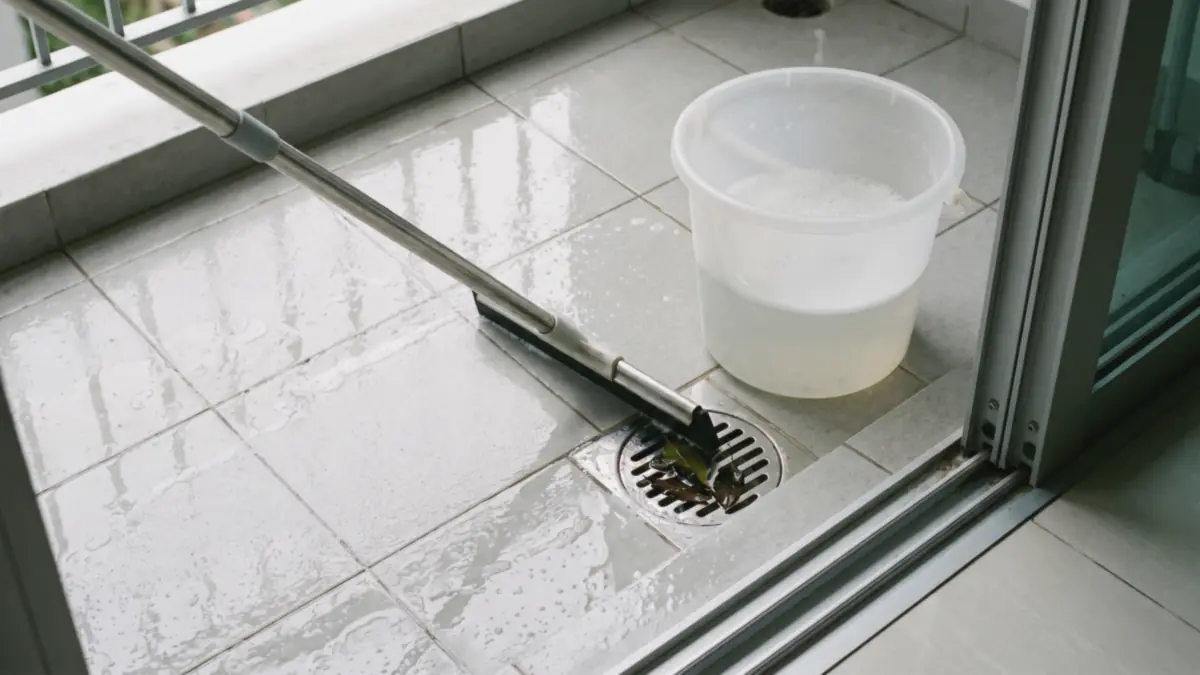
- To clean a balcony, clear it, sweep it dry, then wash with a bucket of soapy water and a squeegee — not a hose, so the water goes down the drain instead of onto the flat below.
- Clear fallen leaves and standing water weekly, and empty plant pot plates every other day. Both are on NEA’s checklist for preventing Aedes mosquito breeding.
- Never leave pails, mops or pots on a ledge or railing. Squalls can knock them off, onto people below.
- Wear gloves and wet pigeon droppings before you scrape them, so they don’t turn to dust.
- One-time home cleaning from Urban Company Singapore starts from $74 for 3 hours, and its listed scope includes mopping and disinfecting floors and balcony.
It’s Saturday morning on the 14th floor of a Punggol flat. The balcony tiles are grey with construction dust, leaves fill the drain, and a pigeon has left its mark on the ledge. You reach for the hose. Your neighbour’s laundry, one floor down, is the reason not to.
How Do You Clean a Balcony?
Work dry first, then wet, and use as little water as the job needs.
- Clear the floor. Move chairs, pots and the drying rack indoors or against the wall, never onto the ledge.
- Dust from the top down. Wipe the ceiling corners, light fitting, door frame and railing tops with a damp microfibre cloth.
- Sweep or vacuum dry. Sweep inwards, not towards the edge — dust swept over the side lands on someone else’s balcony.
- Wash with a bucket, not a hose. A hose delivers more water than the floor drain takes, and the overflow goes onto the flat below. Warm water, a few drops of detergent and a stiff broom do the same job.
- Squeegee towards the floor drain, along the fall of the floor.
- Leave the door open and let it dry before the furniture goes back.
NEA’s home-cleaning guidance recommends a steady wiping motion from clean to dirty areas, and keeping the home ventilated during and after cleaning. On a balcony, start at the door and finish at the drain.
What Does NEA Ask You to Check on a Balcony?
Anywhere water sits for a few days, Aedes mosquitoes can breed — and a balcony has several of those spots. NEA’s Checklist For A Mozzie-Free Home sets out how often to check each one:
| What to check | How often, per NEA | What to do |
|---|---|---|
| Plant pot plates | Every other day | Remove the water and scrub the plate to remove eggs |
| Fallen leaves and stagnant water in drains | Once a week | Clear them so nothing blocks the flow |
| Bamboo pole holders | After use | Cover them so rainwater can’t collect |
| Scupper drains (HDB corridors) | At all times | Don’t block them with pots or other items |
So the weekly sweep and the dengue check are the same job. If the drain smells even when it is clear, the water seal may have dried out — here’s why a floor trap smells and how to fix it.
Why Does a Singapore Balcony Get Dirty So Fast?
Rain, wind and dust, all year. The Meteorological Service Singapore records rain on an average of 171 days a year, and Sumatra squalls with gusts of 40–80 km/h during the Southwest Monsoon.
Those gusts are also why nothing loose belongs on a ledge or railing top. A mop or a small pot that falls from the 14th floor is a serious danger to anyone below.
Haze and construction add a grey film that returns within days. Here’s why a Singapore flat gets so dusty.
How Do You Clean Pigeon Droppings Safely?
Wet them first, then scrape, then wash and disinfect — with gloves on. Dried droppings crumble into dust you don’t want to breathe.
- Put on disposable gloves and a mask. NEA’s guidance lists disposable gloves as the minimum protection, followed by washing your hands with soap and water.
- Spray the droppings with water and leave them a few minutes to soften.
- Scrape them into a plastic bag and tie it off.
- Wash the spot with detergent, then apply a disinfectant as its label directs.
- Wash your hands and the clothes you wore.
To stop them coming back, remove what attracts them. NEA asks residents not to leave food for birds on window sills and to dispose of food scraps properly. If pigeons roost across the whole block, raise it with your town council or condo management.
How Do You Clean a Sliding Door Track?
Dry debris out first, then wipe, then clear the drainage slots. A gritty track makes the door stick, and a blocked one lets rain pool and seep indoors during a storm.
- Vacuum the track with a crevice tool.
- Loosen what’s stuck with an old toothbrush and a little soapy water.
- Wipe the channel with a damp cloth, then dry it.
- Clear the drainage slots on the outer track with a cotton bud or pipe cleaner.
For the glass door and any glass railing, here’s how to clean glass without streaks or water stains.
What Should You Avoid, and What Can You DIY?
| Don’t | Why | Do instead |
|---|---|---|
| Lean over the railing to reach the outside | A fall from height is not worth a clean facade | Clean only what you can reach from inside |
| Mix bleach with vinegar or acidic cleaners | Releases chlorine gas | Use one product at a time, as the label directs |
| Use bleach or scouring pads on wood decking | Discolours and roughens the timber | Mild detergent and a soft brush |
For a weekly sweep and a monthly wash, DIY is the right answer — a broom, a bucket and a squeegee will do it. A cracked tile, a railing that moves or a drain that stays choked after you’ve cleared the grating is a repair job, not a cleaning one.
When Is It Worth Getting Help?
When the balcony is one of several jobs that keep slipping, or moving heavy pots on your own isn’t safe. One-time home cleaning from Urban Company Singapore starts from $74 for 3 hours, and its listed scope includes mopping and disinfecting floors and balcony, alongside bathrooms, dusting and dishes. See one-time home cleaning and book a cleaner in Singapore — book at least 24 hours ahead.
If you’d rather it never piles up, set up regular home cleaning in Singapore. For more cleaning how-tos, browse our home cleaning guides.
Before the visit, prepare for the cleaner coming: move fragile pots inside and mention any pigeon mess or decking. To fit the balcony into your routine, use this daily, weekly and monthly house cleaning checklist.
Frequently Asked Questions
Can I hose down my balcony?
It is best not to in a high-rise flat. A hose puts out far more water than the floor drain takes, and the overflow goes over the edge onto the balcony or laundry below. Use a bucket of soapy water, a stiff broom and a squeegee, and push the water towards the drain.
How often should you clean a balcony in Singapore?
Sweep it weekly and clear fallen leaves and standing water at the same time, which is also NEA’s weekly dengue check. Empty plant pot plates every other day. Give the floor, railings and door tracks a proper wash about once a month, and after haze or nearby construction.
How do you clean pigeon poop off a balcony?
Wear disposable gloves and a mask. Spray the droppings with water so they don’t crumble into dust, leave them for a few minutes, then scrape them into a bag. Wash the spot with detergent, use a disinfectant as the label directs, and wash your hands afterwards.
How do you clean a sliding door track?
Vacuum the loose grit with a crevice tool, loosen what is stuck with an old toothbrush, then wipe the channel with a damp cloth. Clear the small drainage slots on the outer track with a cotton bud or pipe cleaner, so rain drains out instead of pooling.
Can I use bleach on my balcony floor?
Diluted, on tiles, and following the label, yes. Keep it off wooden decking and metal railings, ventilate well and wear gloves. Never mix bleach with vinegar or other acidic cleaners, which releases chlorine gas. For weekly cleaning, warm water with a little detergent is usually enough.
Does a home cleaner clean the balcony?
Urban Company’s one-time home cleaning lists mopping and disinfecting floors and balcony in its scope, alongside bathroom cleaning, dusting, vacuuming and washing dishes. Book at least 24 hours ahead, and mention any plants, decking or pigeon droppings so the cleaner comes prepared.