Key Takeaways
- Replacing a scorched or worn socket falls under Switch / 3-pin plug replacement, which costs $49 in Singapore and takes about 20 minutes with Urban Company. A tiny flash is often harmless; 4 warning signs are not.
- A single small blue flash with no smell or mark is usually normal. It happens when an appliance is already on as the pins connect.
- Switch the socket off before plugging in or unplugging. Singapore sockets have their own switch, and using it stops the spark at the pins.
- The 4 warning signs: a big yellow or orange spark, a burning or fishy smell, a brown scorch mark, or a faceplate or plug that feels hot.
- Anything behind the faceplate is licensed work. You can switch off, unplug and change a plug fuse; replacing the socket is not DIY.
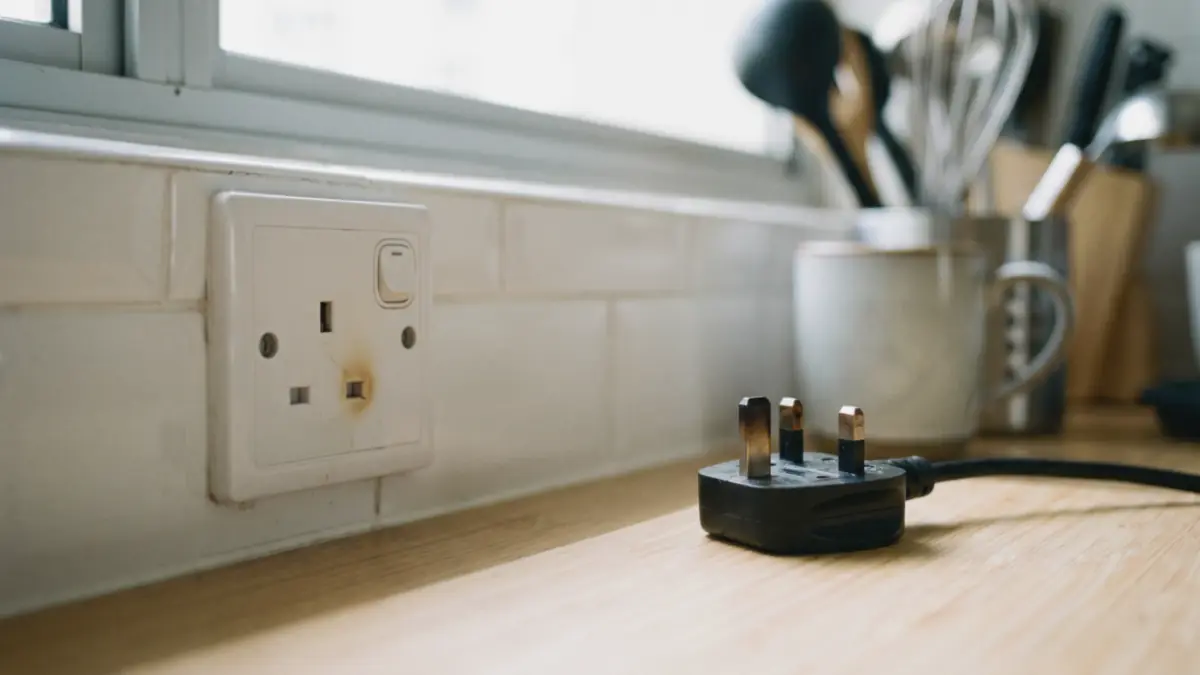
It’s 7am in your Bedok flat. You push the kettle plug into the kitchen socket and there’s a crack and a flash. The kettle boils fine, but the faceplate looks a little brown around the bottom hole. That brown mark matters more than the flash.
Is It Normal for a Socket to Spark When Plugging In?
A small, brief blue spark can be normal; a big, coloured, repeated or smelly one is not. When you plug in an appliance that is already switched on, current jumps the last millimetre between the socket contacts and the pins. Chargers and appliances with motors draw a quick rush of current at that moment, so they flash more often.
The fix for the harmless kind costs nothing. Singapore sockets are switched, so switch the socket off, plug in, then switch it on. CPSO advises you to switch an appliance off before unplugging it from the mains, and the same habit works going in. If you still see a spark with the switch off, the socket itself has a problem.
Normal Spark or Warning Sign?
| What you notice | What it usually means | What to do |
|---|---|---|
| Tiny blue flash, once, no smell or mark | Normal connection spark | Use the switch-off habit |
| Spark every time, even with low-power items | Loose terminal or worn contacts | Stop using it; get it checked |
| Large yellow, orange or white spark, or a crackle | Arcing or a short circuit | Switch off at the DB box |
| Burning-plastic or fishy smell | Plastic overheating near a connection | Stop using it; get it checked |
| Brown or black mark on faceplate or pins | Repeated overheating | Replace the socket and the plug |
| Faceplate or plug warm to the touch | Poor contact or overload | Unplug; spread the load |
| Plug wobbles or droops | Socket contacts lost their grip | Replace the socket |
What Should You Do Right Now?
Cut the power to that socket, then stop using it until someone has looked at it. In order:
- Smoke or flame: leave, close the door behind you and call 995. Don’t throw water on an electrical fire.
- Switch the socket off at its own switch, if you can reach it without touching anything hot.
- Unplug by the plug body, with dry hands, never by the cord. If the plug is hot, discoloured or stuck, leave it in.
- Switch off that circuit at the DB box. Kitchen and bedroom sockets usually sit on their own labelled breakers. If you’re unsure which, switch off the main switch. If it had already tripped, see why a circuit breaker keeps tripping before resetting it.
- Check the plug for bent or blackened pins, cracks or melted plastic.
If the socket now does nothing at all, read what to check when a power socket stops working.
Why Do Sockets Spark? 5 Common Causes
Most dangerous sparking comes from a poor connection that heats up under load.
- A loose terminal behind the faceplate. Wires work loose over years of heating and cooling, and the connection arcs.
- Worn socket contacts. The springs that grip the pins weaken, especially on sockets used daily for kettles or air fryers. Lights that dim when the kettle goes on can be the same fault; see why lights flicker in an HDB flat.
- An overloaded adaptor. SCDF’s advice is to never overload electrical outlets with electrical appliances. Plug kettles, heaters and air fryers straight into the wall, 1 per socket; extension cord safety covers power strips and chaining.
- A damaged plug or cord. SCDF says frayed wires or cracked cords should be replaced or repaired immediately.
- Moisture. A socket near the sink, a wet hand or a damp plug from a washing area.
Do Type G Plugs Make a Difference?
Yes. Using the right plug is part of the fix. Most appliances here should use the 13A 3-pin fused Type G plug, which must carry a SAFETY Mark. The same CPSO page says round-pin Schuko plugs from Europe are not suitable here, and that you shouldn’t force a 2-pin plug into a 3-pin socket; use a fused conversion plug instead. Forcing a plug that doesn’t fit damages the socket contacts.
If the plug fuse blows, replace it with one of the same rating. A fuse that keeps blowing points to an appliance fault.
What Can You Safely Do Yourself?
You can switch off, unplug, inspect, spread the load and change a plug fuse. You can’t open or replace the socket.
HDB states that only a licensed electrician can replace socket outlets, and EMA requires electrical works at home, including repair or replacement, to be carried out by Licensed Electrical Workers. Don’t unscrew the faceplate, don’t tape over a scorch mark, and don’t keep using a socket that sparks every time just because it still works.
When Should You Call an Electrician?
Call for any scorch mark, smell, hot faceplate, loose socket, or a spark with the switch off. These can get worse without tripping a breaker.
With Urban Company, a scorched or worn socket is usually replaced under Switch / 3-pin plug replacement, $49 and about 20 minutes. A Professional arrives within 30 minutes of booking; ask whether the person attending is a Licensed Electrical Worker. Read what drives the cost of an electrician in Singapore to see why quotes from other providers differ, or see the full electrician price list and book an electrician in Singapore. More fixes are in our electrician guides.
Frequently Asked Questions
Is it normal for a socket to spark when plugging in?
A single tiny blue flash inside the socket, with no smell and no mark, can happen when you plug in an appliance that is already switched on. It is the current jumping the last millimetre to the pins. A large, yellow or orange spark, a crackle, a smell or a spark every time is not normal.
Why does my plug spark when I plug in my phone charger?
Chargers and laptop adaptors draw a quick rush of current the moment they connect, so a brief flash at the pins is common if the socket is already on. Switch the socket off, plug in, then switch on. If the spark still appears with the switch off, the socket itself needs checking.
What should I do if my socket sparked and smells burning?
Switch the socket off if you can do it safely, then unplug by the plug body with dry hands. If the plug is hot or melted, leave it and switch off that circuit at the DB box instead. Don’t use the socket again until an electrician has checked it. Call 995 for smoke or flame.
Is a scorch mark on a socket dangerous?
Yes. A brown or black mark on the faceplate or the plug pins means that connection has been overheating, usually from a loose terminal, worn contacts or a heavy load. It can keep getting worse without tripping anything. Stop using that socket and have it inspected and replaced by a licensed electrician.
Can I replace a sparking socket myself in an HDB flat?
No. HDB states that only a licensed electrician can replace socket outlets, and EMA requires electrical work at home, including repair and replacement, to be done by Licensed Electrical Workers. You can switch off, unplug, inspect the plug and change a plug fuse. Anything behind the faceplate is regulated work.
Why does my plug feel loose in the socket?
The spring contacts inside an older or heavily used socket lose their grip, so the plug wobbles or droops. A loose fit means a small contact area, which heats up and can spark under load. Check the plug pins are straight and clean. If other plugs feel loose too, the socket needs replacing.